Front:
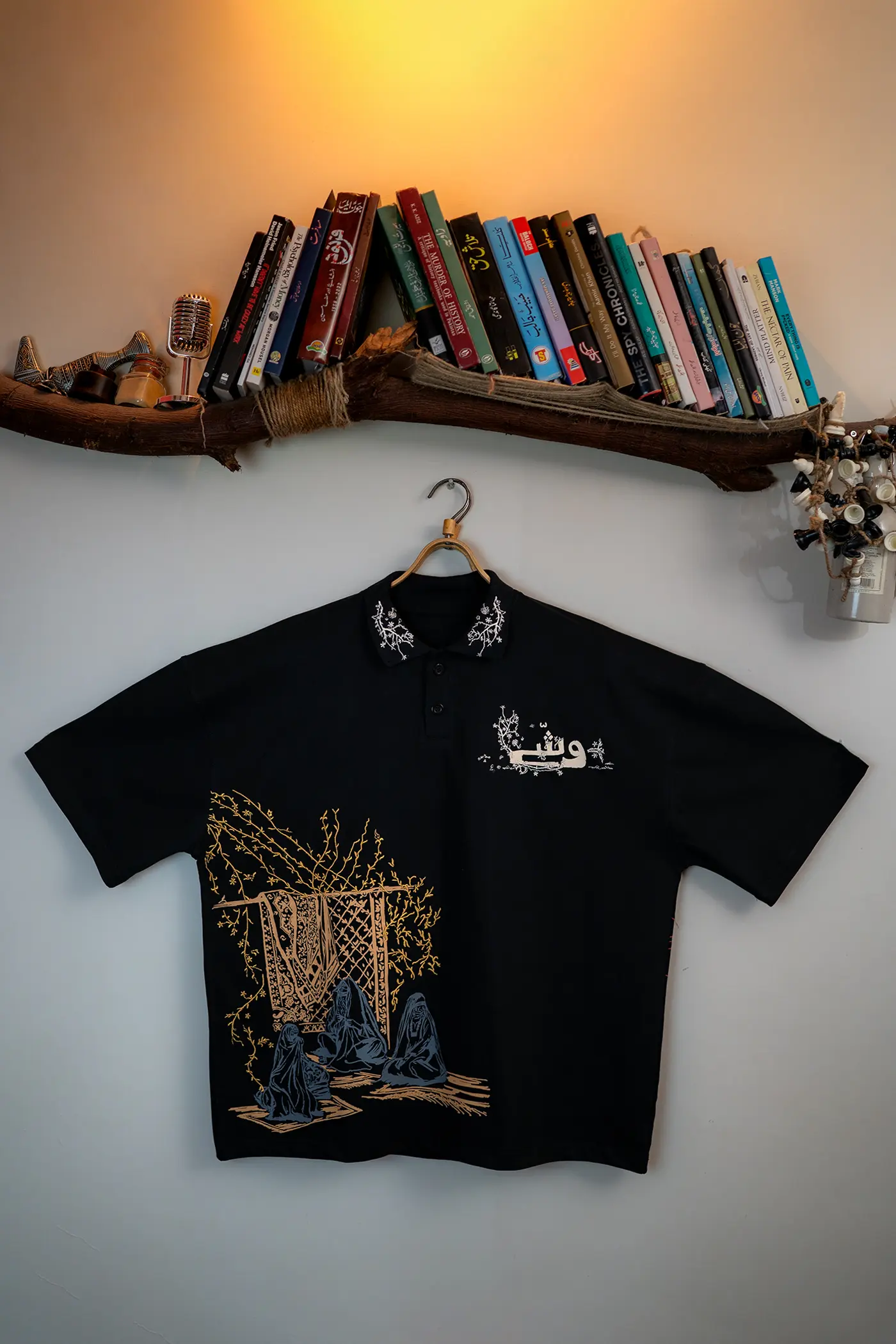
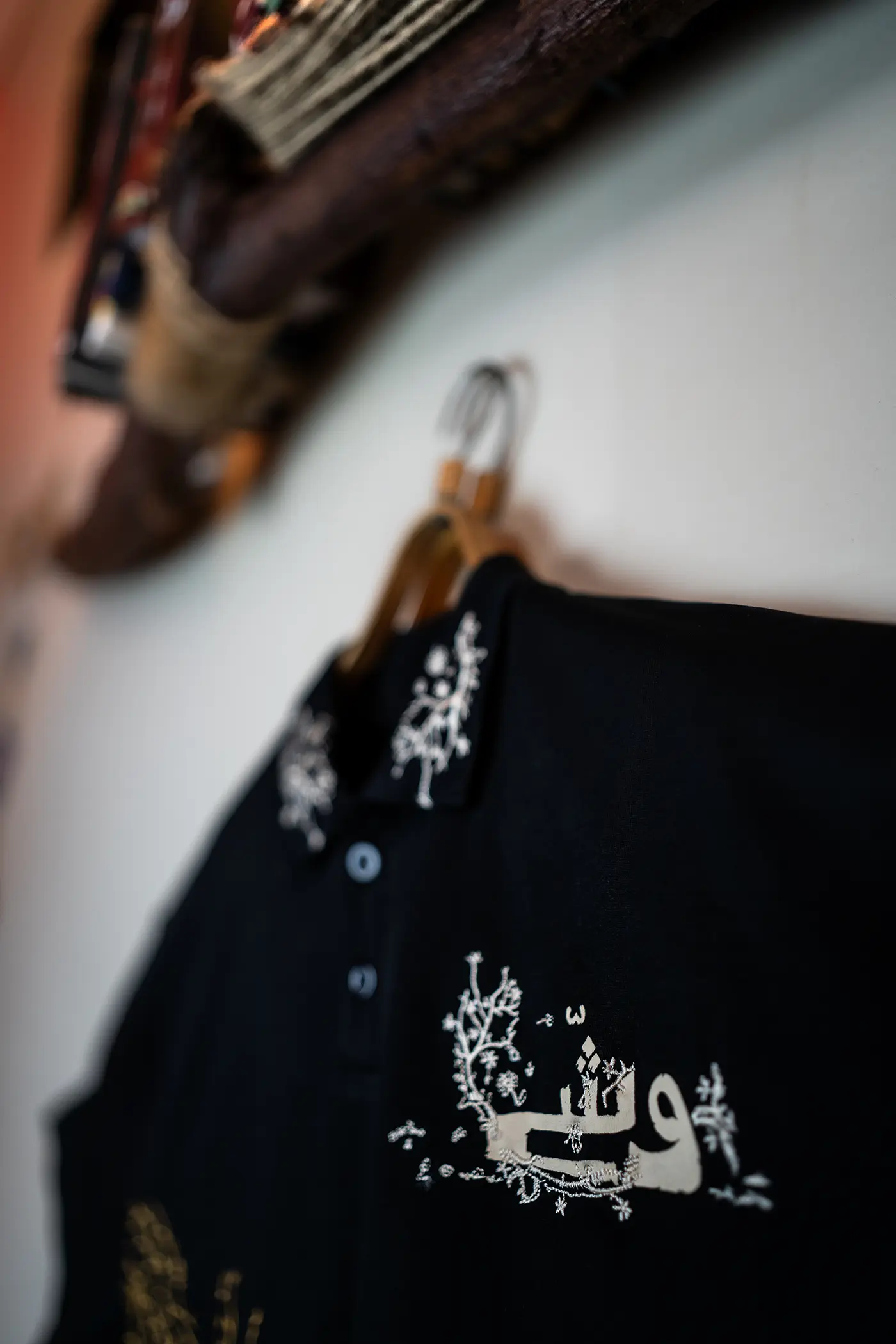
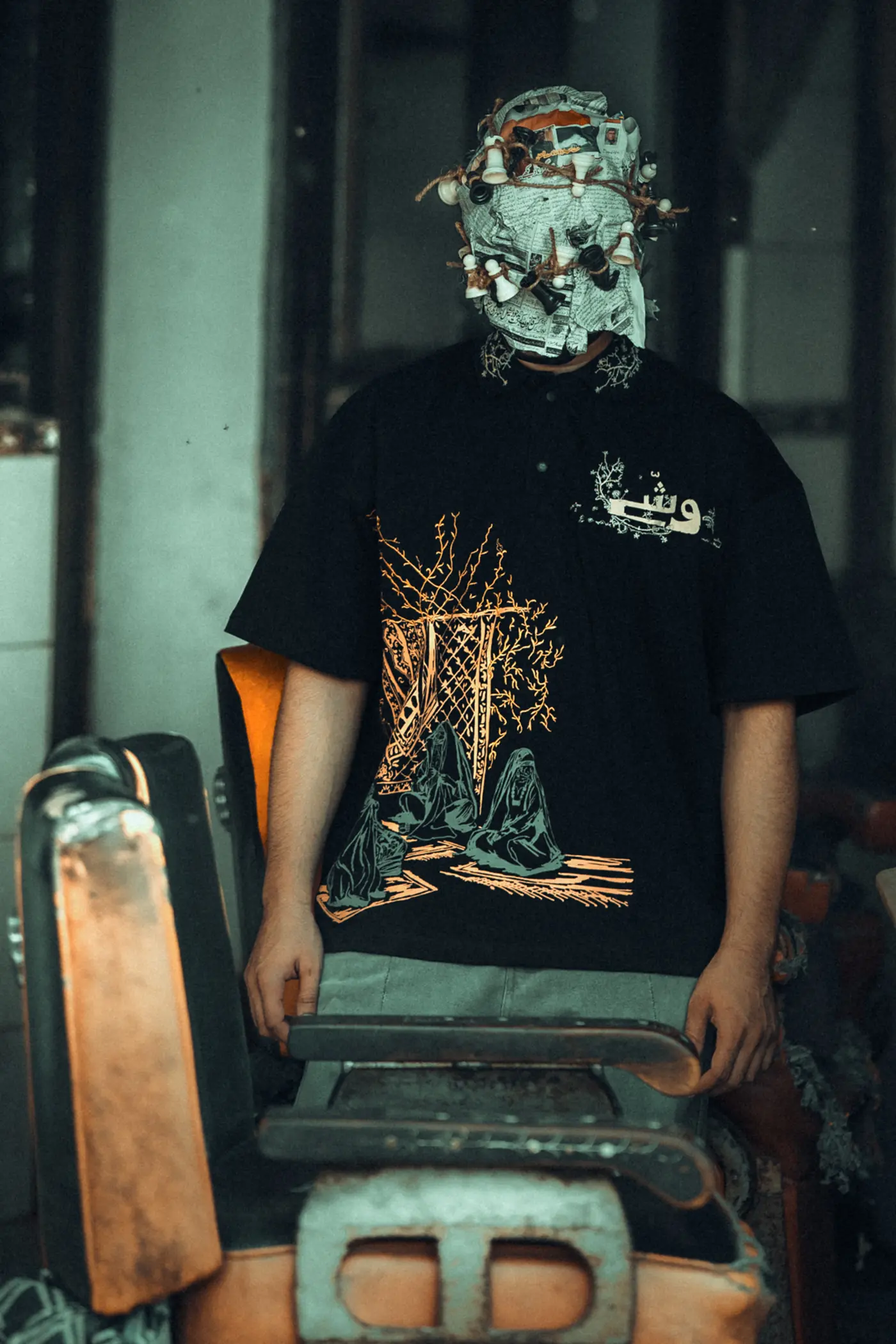
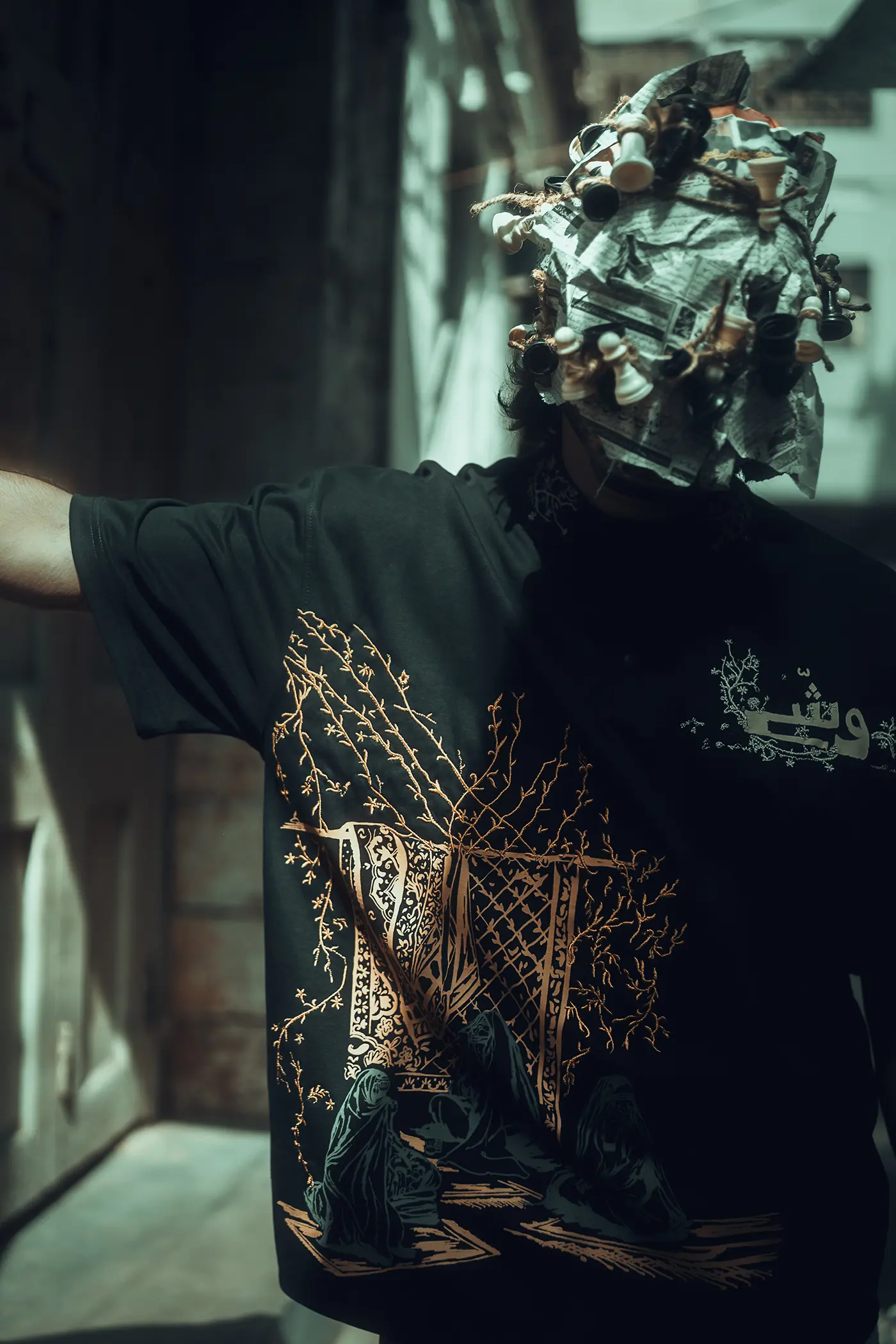
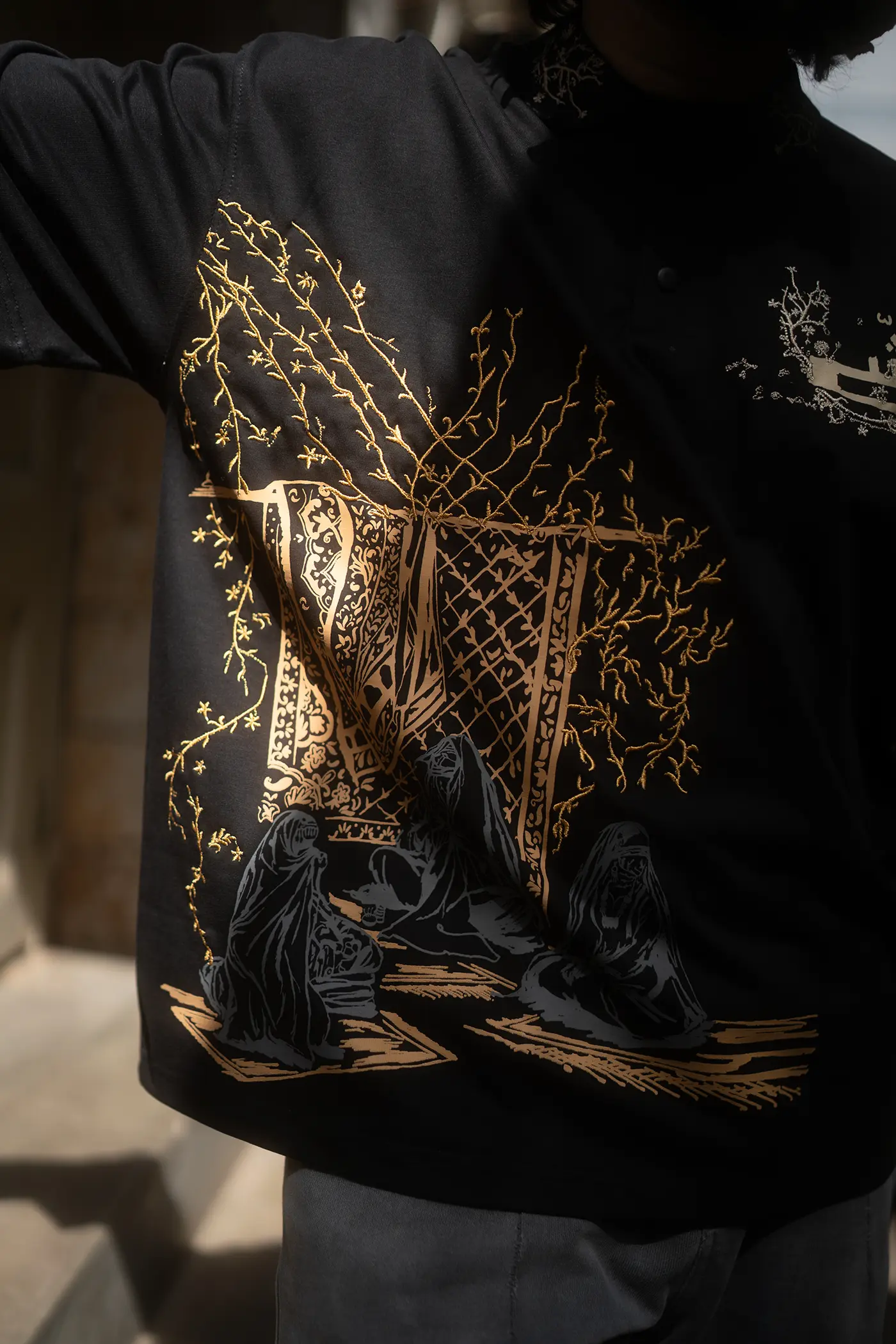
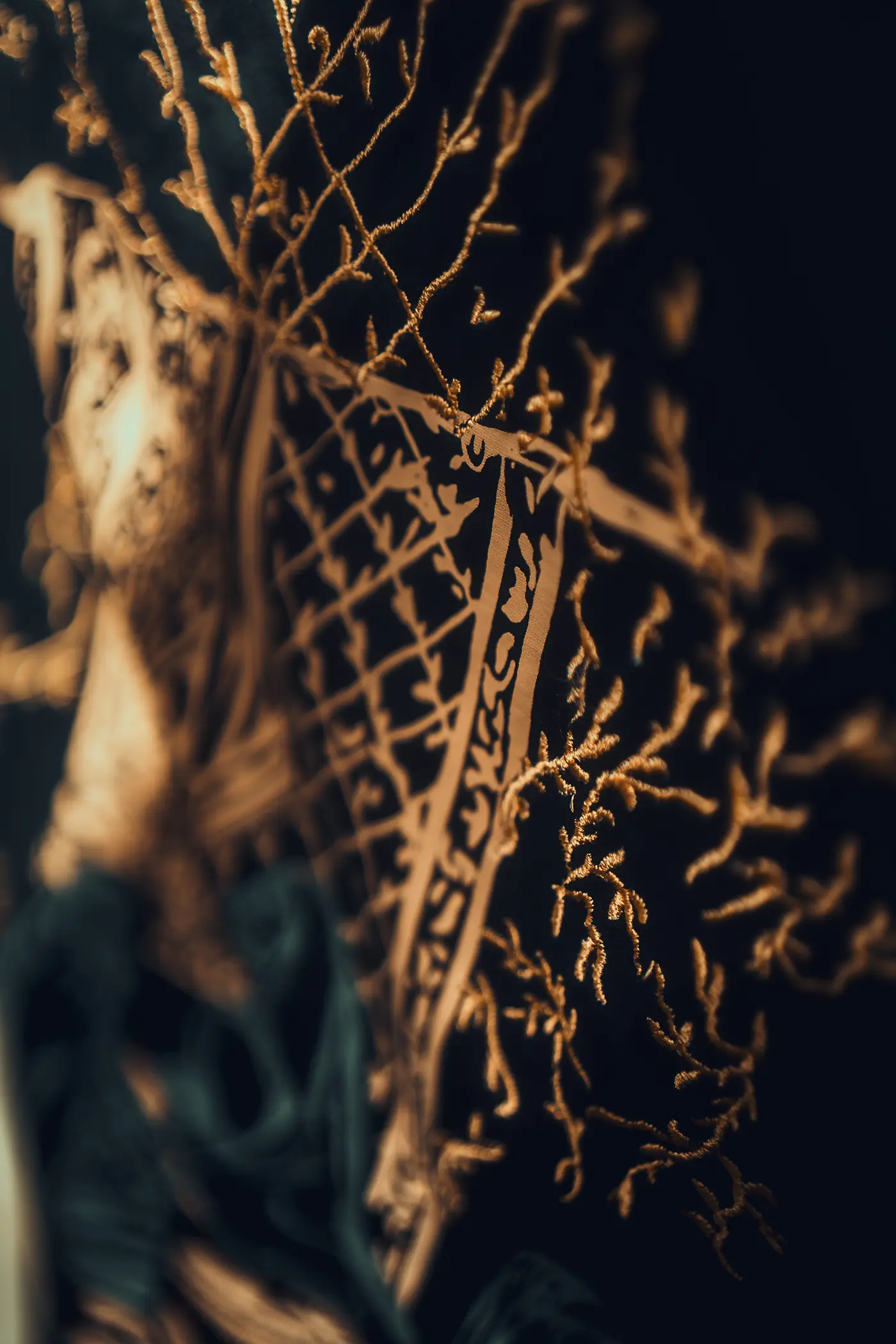
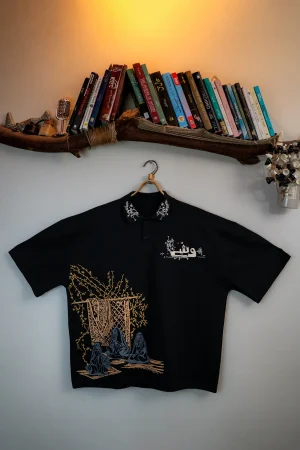
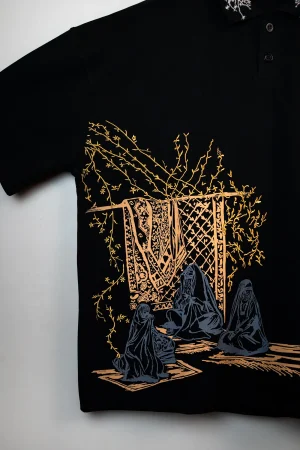
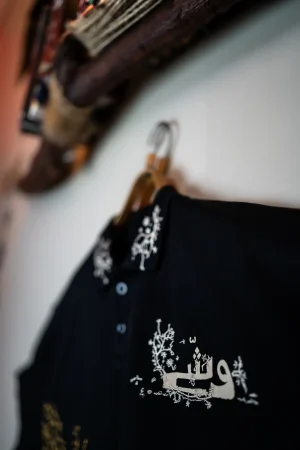
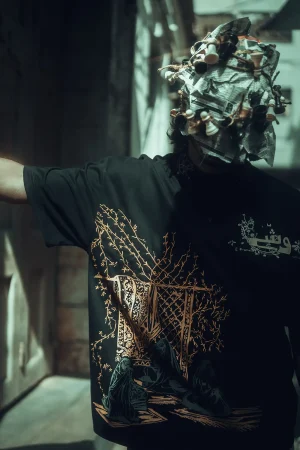
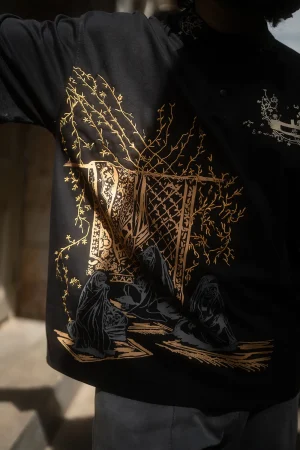
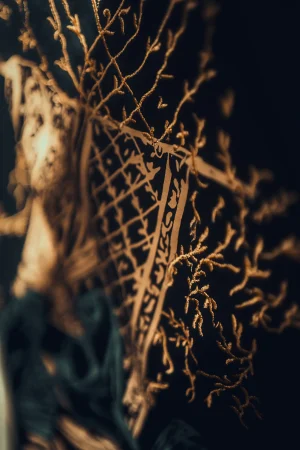
The front of the polo reflects the beauty of heritage, craftsmanship and the often-overlooked role of women in preserving culture. Embroidered barren flowers and foliage surround the Vshey logo, symbolising growth, life and authenticity. Similar embroidery details are carried around the collar, adding a subtle connection between nature and craftsmanship.
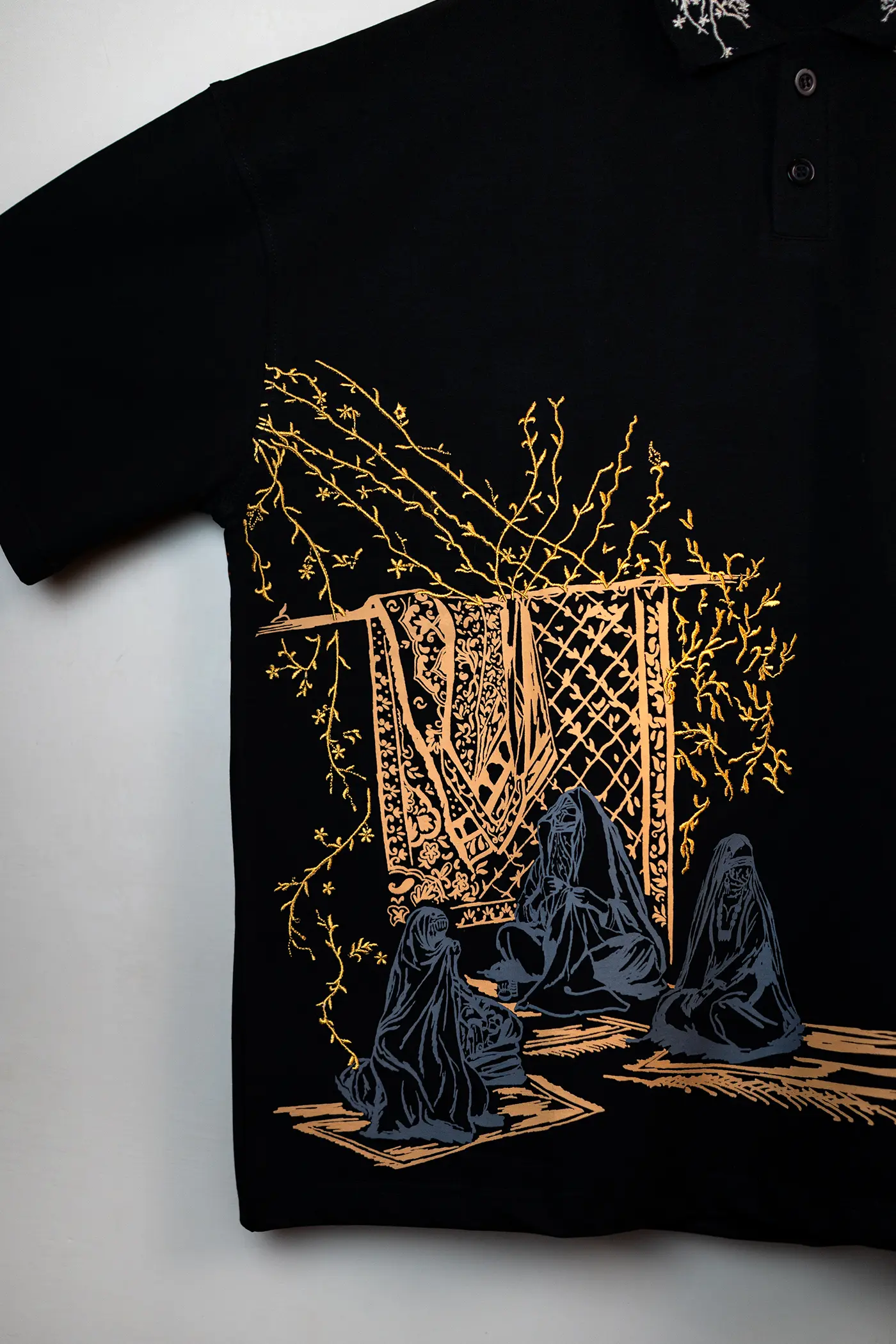
A group of women sits together, working and sharing conversations, representing resilience, dedication, and the timeless artistry passed down through generations. Behind them, embroidered shrubs and foliage create a natural frame around the women, while a traditional carpet and woven shawl form a rich cultural backdrop. The flowers and natural elements emerging through the composition symbolise how beauty and tradition continue to flourish through the hands of those who preserve them.
Back:
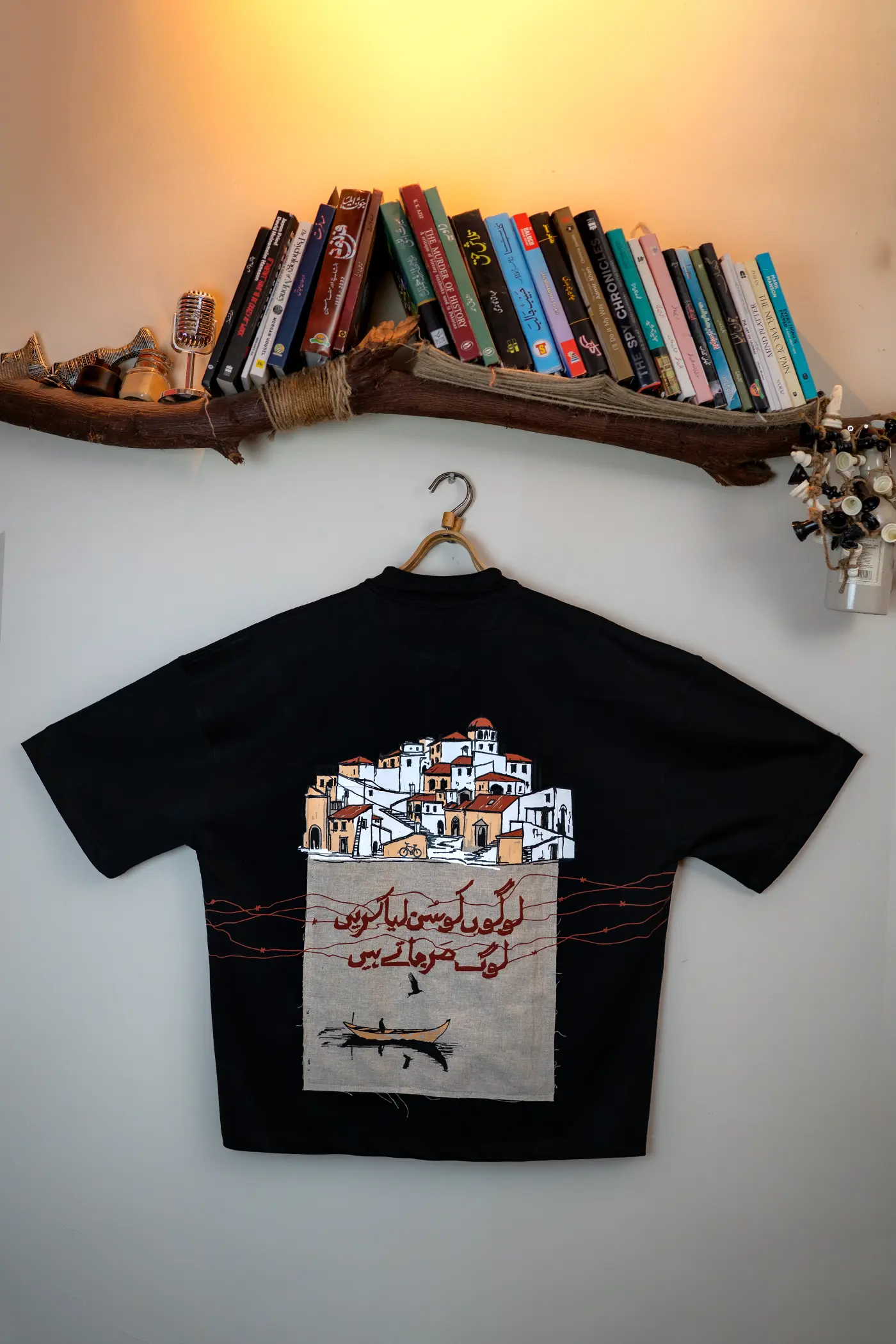
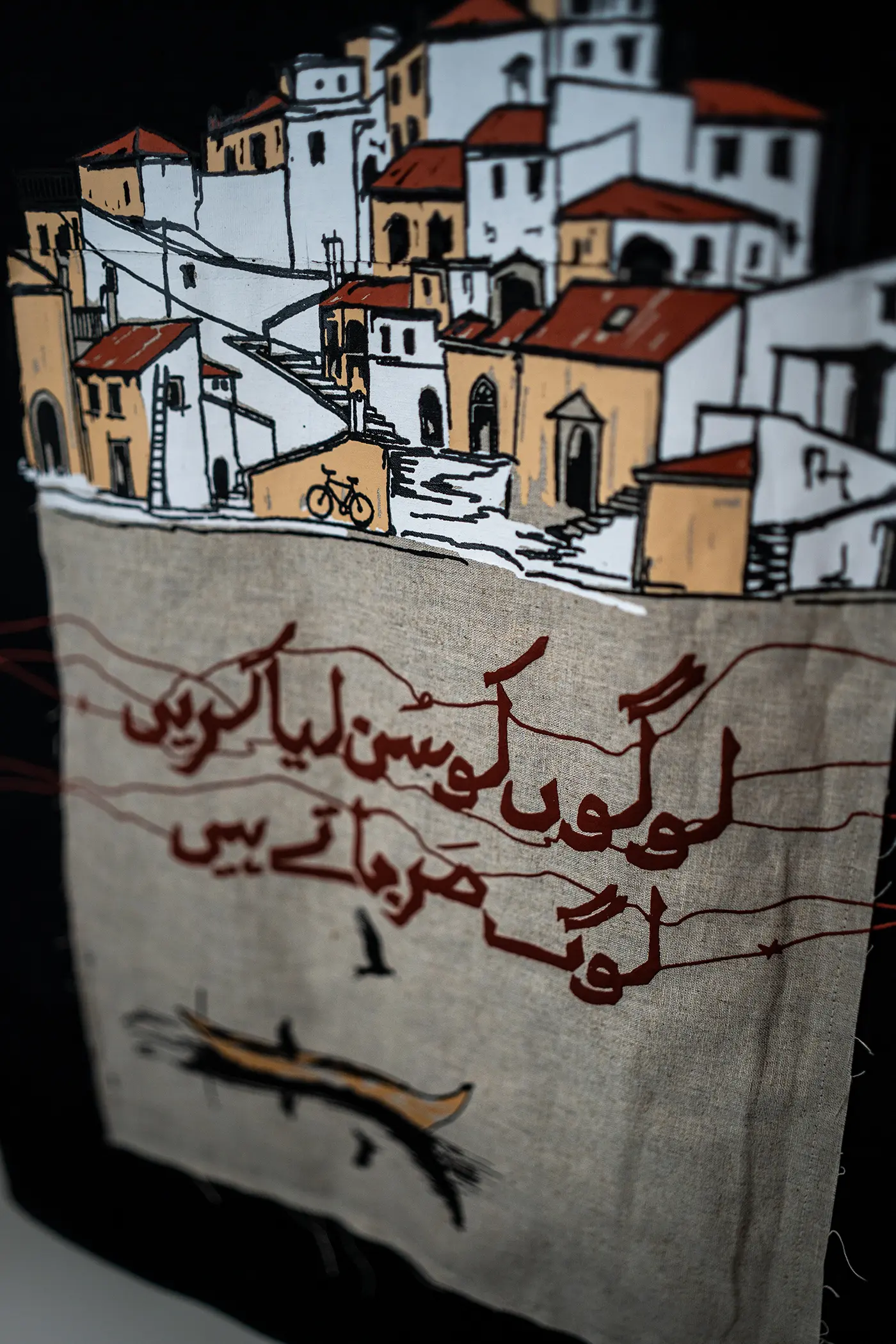
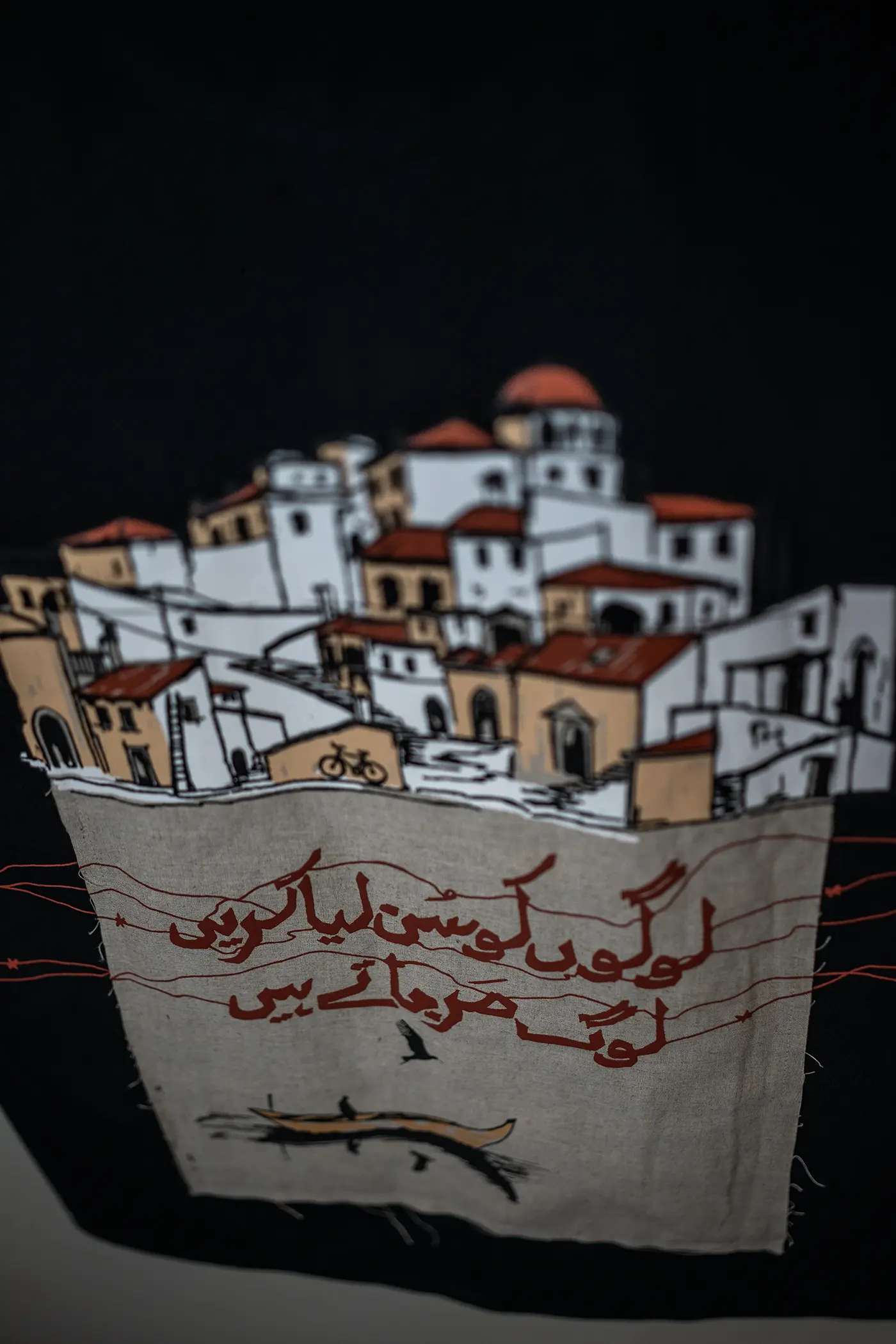
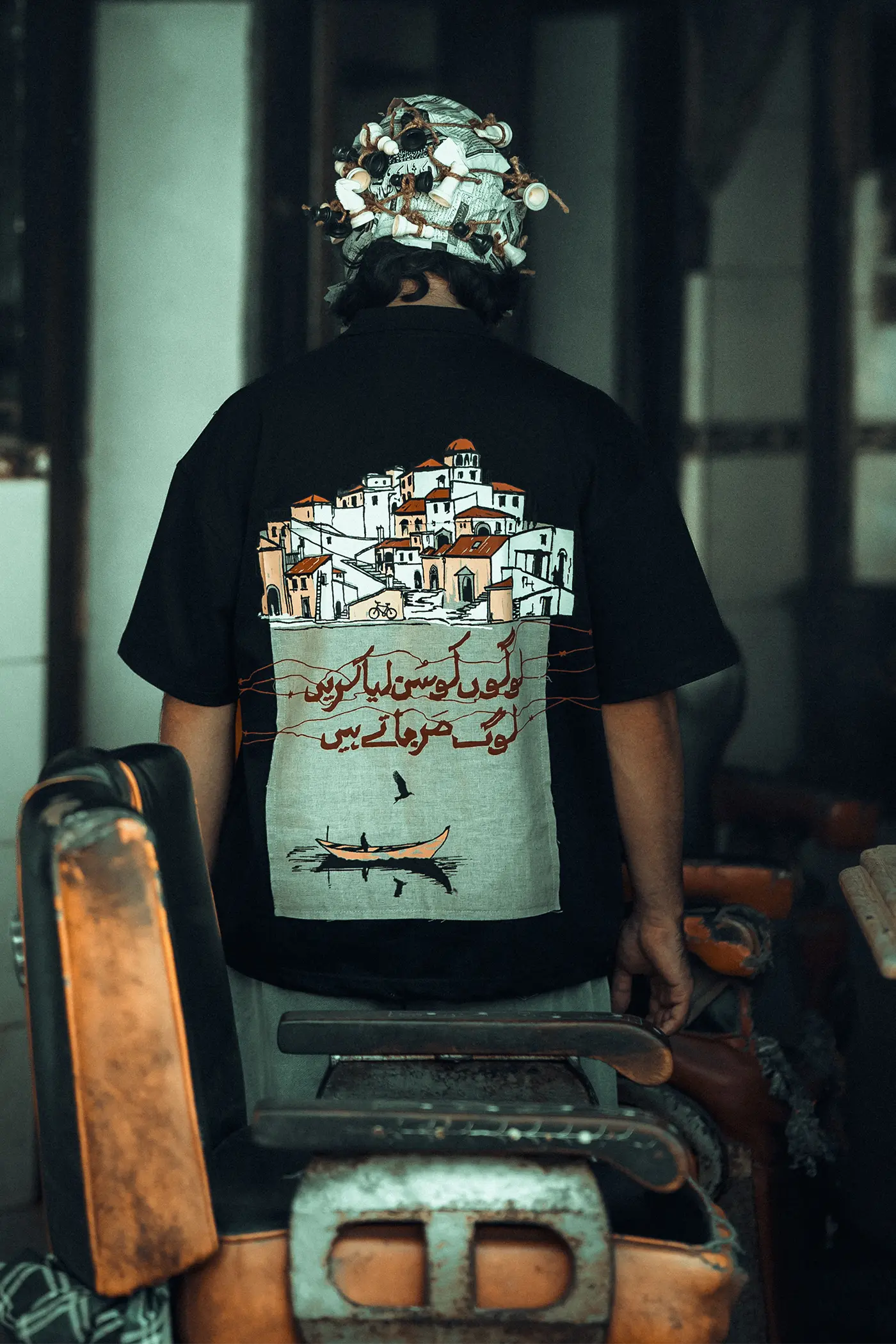
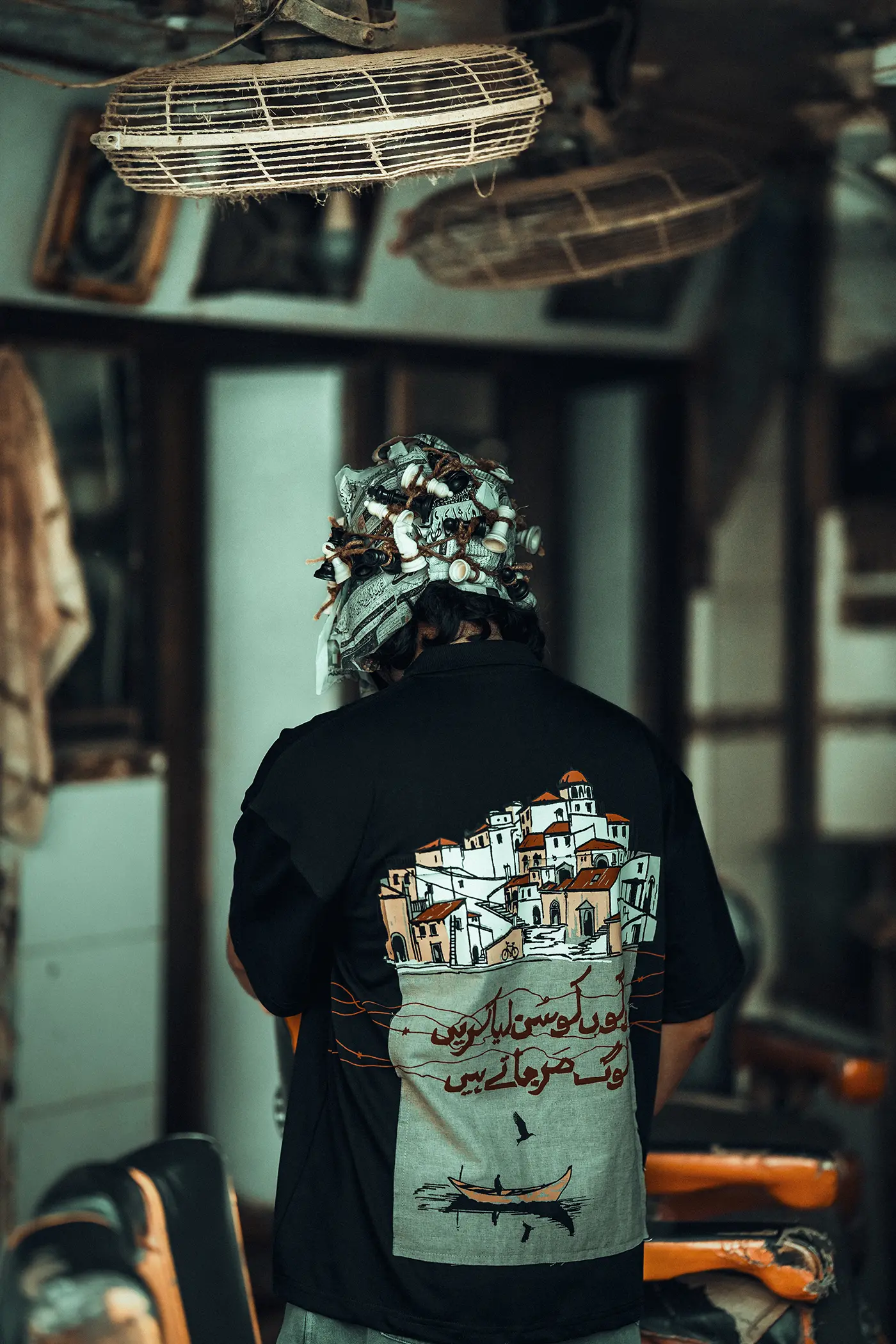
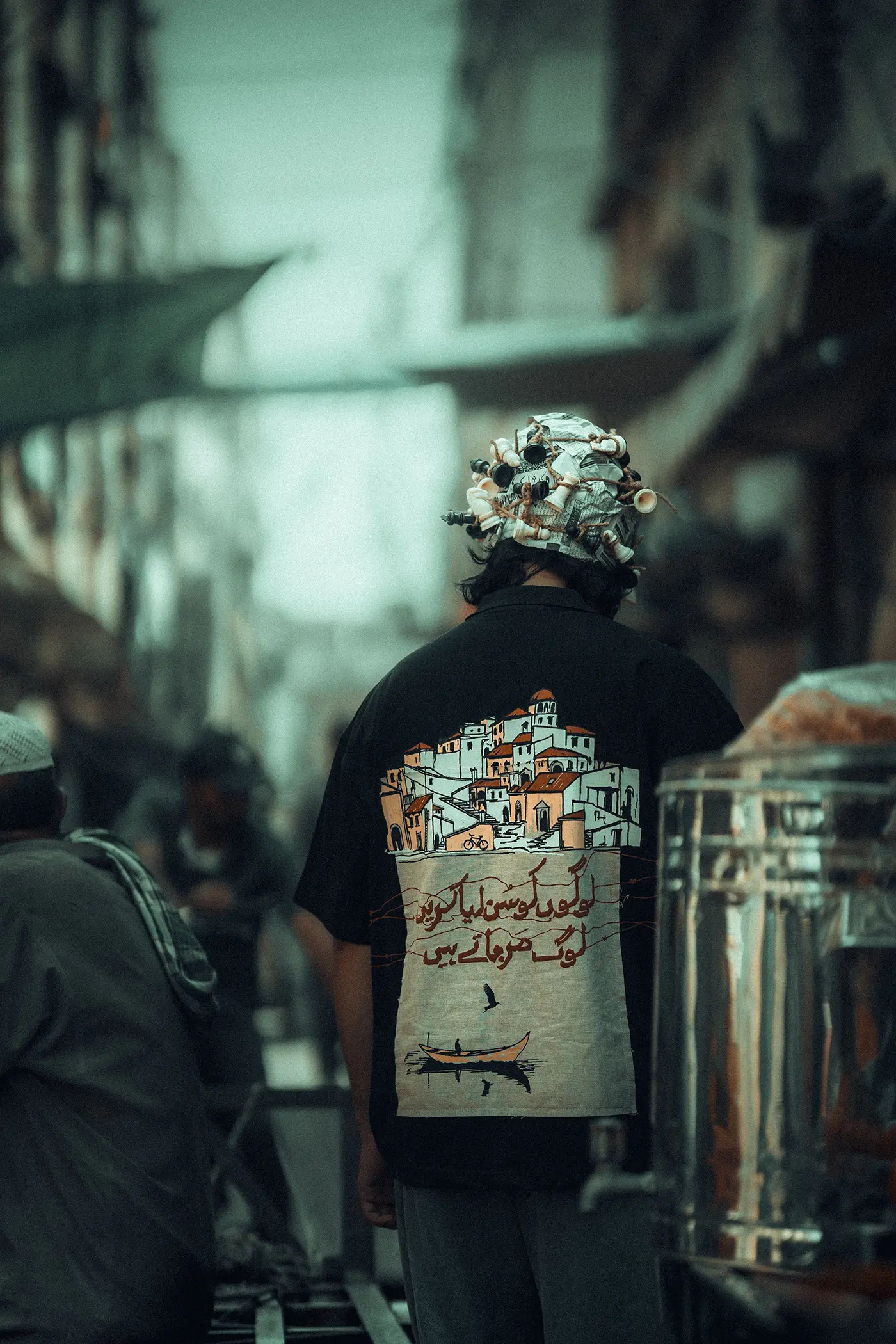
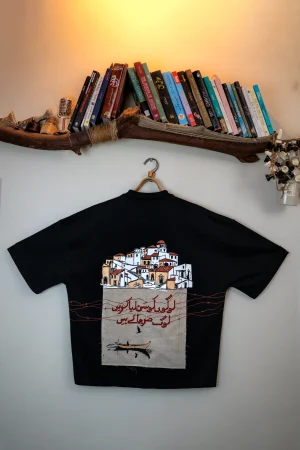
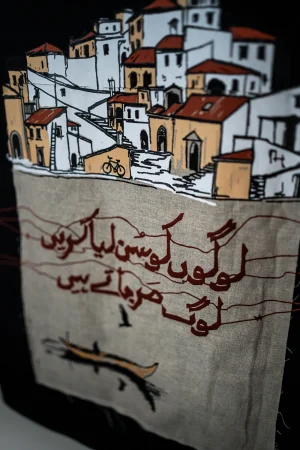
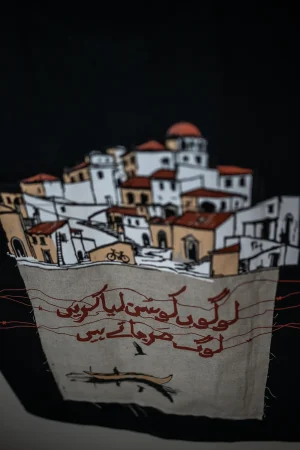
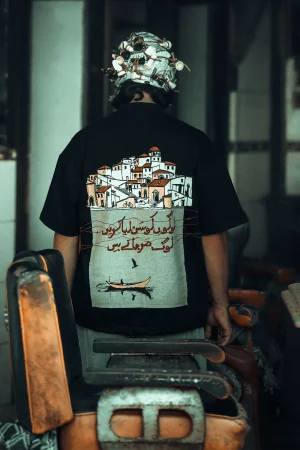
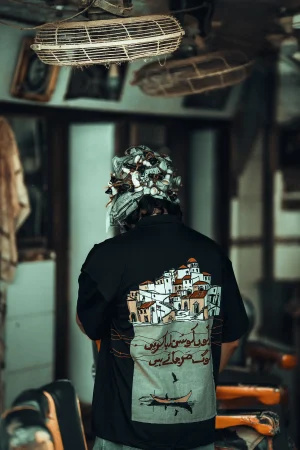
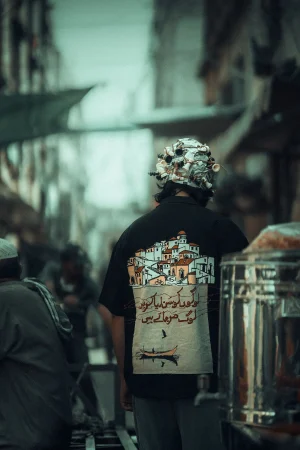
The back features a large premium cotton fabric patch that reflects the realities of society. The patch carries screen-printed artwork depicting a lone man rowing a small boat, symbolising solitude, sacrifice and the struggles one faces while navigating through life.
Above him, the presence of his society and community represents the environment that shapes an individual’s identity and perception. No matter how far a person travels, their roots, surroundings and society remain a part of their story.
Above the artwork, a poetic statement appears in puff screen print, wrapped with the visual language of barbed wire:
“Logo’n ko sun liya karein, log mar jaate hain.”
The poetry reflects the emotional reality of society, the things people carry silently, the words left unheard and the consequences of failing to listen. It invites the viewer to look beyond appearances and understand the human struggles that often remain unseen.
Together, the front and back create The Mirror of Society. One side portrays women, craftsmanship, heritage and the hands that preserve culture, while the other portrays solitude, struggle, society and the emotions people often keep hidden. The article doesn’t attempt to give a single answer. Instead, it holds a mirror to society and invites the viewer to pause, observe, and reflect.